About Me

My photo
I am an International Development student from Canada who is studying in India on a semester abroad. I will be traveling and studying through India for five months from January until May.

Tuesday, March 13, 2012

Udaipur


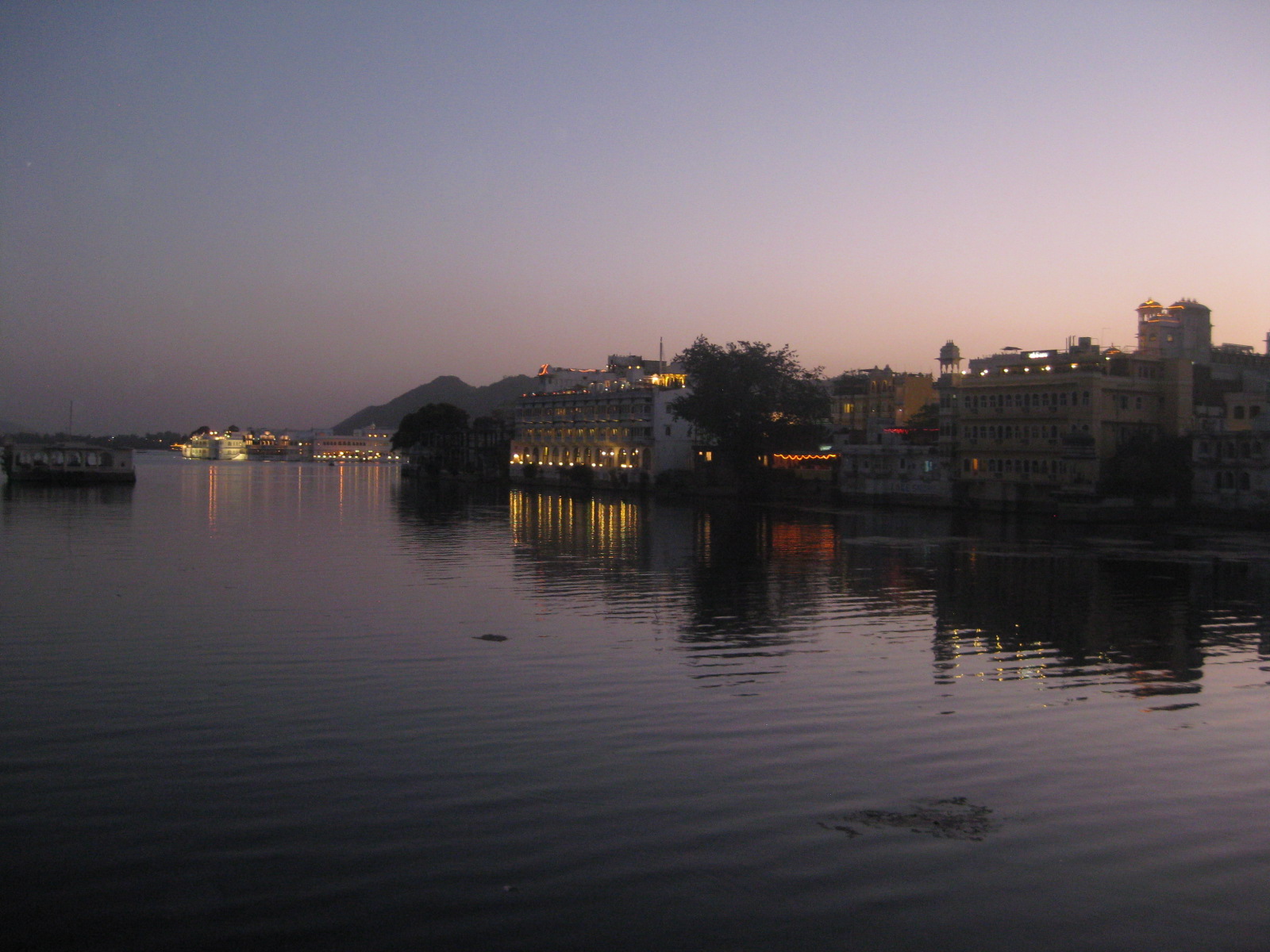
Udaipur is considered the most romantic city in India and along the water I can understand how the city got this description. The old city is situated around Lake Pichola, which rivals Varanasi in terms of aesthetic appeal because Lake Pichola is much cleaner than the Ganges and along the water is very well maintained. The area is famous from one of the older James Bond films called Octopussy in which the lake and palace were used and many restaurants show this film each night at 7:00 pm.

The old city is framed by the Aravalli hills and the outstanding sights are The City Palace and the Lake Palace, which are located in the middle of the lake. It seemed as though every restaurant that we went to in Udaipur was a rooftop and they all had incredible views of the old city and lake.


My time in Udaipur was especially memorable because we happened to be in the city during Holi. Holi is a Hindu festival of colours in which people in the streets will throw coloured dye on each other. It is meant to be a light, happy celebration. My Indian host family told me that there was no significant spiritual meaning to the festival, it is purely meant for enjoyment. Some people celebrate Holi for more than one day, however, the celebration with throwing dye is only one day. During Holi, businesses are closed during the celebration and social norms are relaxed. A common greeting during this time is “Happy Holi”, just like we would say “Merry Christmas” or “Happy New Year”.


One major problem with Holi is to do with the quality of the dye. There are natural and chemical dyes, although the natural dyes are more expensive. During Holy, people go for quantity rather than quality of dye. There are serious health affects associated with the chemical dyes, such as skin cancer and respiratory disorders. Also, foreign women can face the threat of inappropriately behaviour from some men who are drinking or are too caught up in the excitement of the festival. For these reasons, I did not participate in Holi but I was able to see some of the celebrations before and see the aftermath. I think that I would have had the best time participating in Holi if I was a young Indian boy.

After leaving a restaurant on the night before Holi we found ourselves among the Holi celebrations on the street. In the afternoon, huge piles of wood had been set up in the streets in teepees and these were lit on fire and burning all around. There were also fireworks being lit off around these fires. Families, groups of women, and groups of young men were on the streets enjoying the social celebration. Some people had brought huge speakers and were playing Bollywood as well as North American top 40 songs. The streets were not officially closed off but traffic was significantly affected.

On the day of Holi, the dye throwing ended around 3:00 pm and by about 5:00 we felt that we were safe to go check out the old city. The auto-rickshaw drive that we took to get to the old city was one of the strangest that I have taken in India. The streets of Udiapur were eerily quiet, which is very rare of any Indian city because of the large population of the country. There was evidence of the dye all over the streets, on scooters, auto-rickshaws and motorcycles, and on the cows roaming the streets. Some shop owners were starting to clean up the front of their shop in order to open for the afternoon and the last of the people who participated in the dye throwing festivities were slowing filing home to clean up. It seemed as though the young boys and men were the most covered in colour although I think that they were also the one throwing the most dye at others. Some older people were also covered in dye, although not as much as younger people.

During the days following Holi I was able to know who had participated in the festivities because some of the dye was still on their skin. I was told by a shop owner that many people will but oil on their skin before Holy. This way the dye will not stay on their skin and if they are caught by someone with dye then they can slip away. I saw many young boys with water guns during the days leading up to Holy. I learned that dye sinks into the skin better with the water than without.  

Monday, March 5, 2012

Jaisalmer


Jaisalmer is called the Golden City because the old city is constructed of the same golden honey sandstone. The fort is the main attraction of the city and it looks like a massive sandcastle in the middle of the desert. The inside of the fort is made up of narrow streets with shops, Jain temples, a maharaja's palace, and a museum. Jaisalmer Fort is a living fort, meaning that there are many people who live in it. On the first day when we were looking out over the city a man on the next rooftop invited us up onto his roof where there was an even better view of the city.


The streets that lead to the entrance of the fort are lined with shops that capitalize on the tourists coming through. You can buy leather good, handwoven table runners and wall hangings, pashminas, bedding, and various other ragasthani crafts. The shop owners are good sales people but hard bargainers – you have to be very persistent if you want to pay a fair price.


Among the shops on the streets leading to the fort we found one man's photography shop where he sold old prints of pictures taken in India. His family had been in the photography business for three generations on the same street in Jaisalmer. He showed us the old fashioned camera that his grandfather used to take pictures and said that all of the prints that he had for sale were pictures taken from this camera. For each picture there was a short story that the man could tell you about it. I chose a picture of two women dancers taken in 1911. These women were covered in jewelry- 10 bangles on each arm, about the same amount of anklets on each leg, and huge flower nose rings.

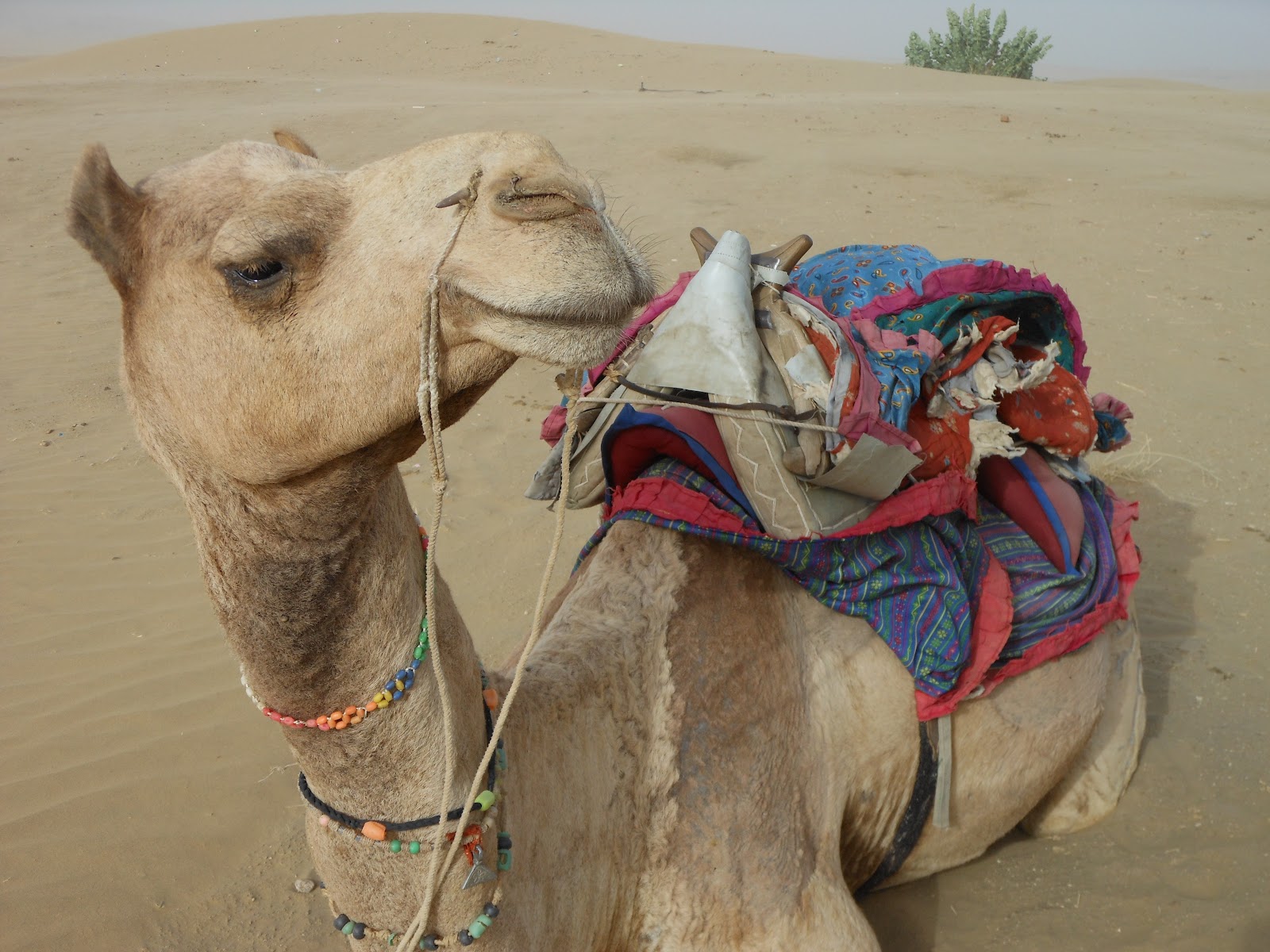
On the afternoon of the second day in Jaisalmer we took an hour bus ride out of the city and into the dessert where we spent the night. We were dropped off on the side of the road and were taken by camel to our tents. We were two to a camel and each camel was led by a little boy who helped us get on and off and kept checking that we were alright with their limited English vocabulary. We stopped part way to the tents to get off the camels and watch the sunrise on the sand dunes and the boys who guided our camels gave us the opportunity to ``race`` with them. I thought that I would give it a try and although a little scary it was really fun. My impression of camels from what I have seen of them here in India is that they are lazy animals that will do what you want them to, although not at a fast pace. I climbed on the front of the camel and the 10 year old boy who guided our camel went on the back, holding the reins like a horse. The little boy got the camel going so fast that I was literally bouncing in the air off the seat. When I started bouncing off to one side the little boy in the back had to hold my shoulders down so that I didn’t fall (although I think that if I was going down, he would not be strong enough to catch me).


During our camel ride to the tents and for the rest of the night the wind was very strong and was picking up sand with it. With a strong gust of wind, any body part that was not covered would be blasted by sand and it could actually be a bit painful (It was a little less graceful and glamourous than the girls in the latest Sex and the City movie). It reminded me of the feeling that you get when going skiing in the winter. We tried our best to cover our faces with scarves and sunglasses. I had the most trouble with getting sand in my eyes. I finally started to realize the practicality of a full burka in the dessert (here I was thinking that the women were oppressed and uncomfortable).

In the evening we were entertained by a ragisthani cultural music and dance show. It was shown on a circular raised stage outside and we were seated on cushions and pillows. After the performance we were had a ragisthani feast in the dinning hall and slept in our tents.  

Sunday, February 26, 2012

Varanasi


Varanasi is one of the holiest places in India. Hindu pilgrims come to the Ganges River (or River Ganga as it is called here)  to wash away their sins in the water or to cremate. Dying in Varanasi or being cremated here offers moksha (liberation from the life death cycle).

The first day in Varanasi was a huge change from south India and totally stimulating for the entire time. In the morning we took a auto-rickshaw to the Ganges and walked around, starting at the southern most ghat, the Assi Ghat and walking north along the Ganges River. Away from the water, there are many winding, narrow alleyways that are full of shops and restaurants. The monkeys use these narrow alleyways to their advantage and steal food from the offerings that people make to Ganesh (the Hindu elephant god). The great restaurants are easy to miss although they are worth being persistent and seeking out. For lunch we went to a place called the Brown Bread Bakery which is a restaurant associated with an NGO that supports a women's empowerment group and a school for children. Everything is organic and instead of chairs, there are cushions and low tables to hang out around.


In the evening, we went to a light festival called the Ganga Aarta on the water. We took a row boat out on the river as the sun was setting and the light ceremony was being set up. The first stop with our boat was the burning ghat in which people would bring their deceased relatives to be cremated on the shore of the Ganges. At this ghat you are not allowed to take photographs because of respect to the families. This ghat has a much quieter and somber mood compared to all the excitement at the other Ghats. Cremation happens at this ghat 24 hours a day and only the male members of the family are allowed to participate. Apparently the women cry too much and this means that the person does not have a good death. At this point I was really moved by how spiritual Hindu culture is in India and how different their perception to death is to that of western culture.


(piles of wood from the burning ghat)


After seeing the burning ghat we were taken back to the main ghat where the Ganga Aarta was being held. At this point I wished that I knew some more Hindi to better understand the chants. This ceremony featured fire and dance by 7 Hindu priests on shore. At the beginning of the Ganga Aarta, we each lit a lotus flower candle and set it adrift on the water. Before releasing the lotus flower candle you have to first think of someone dead then someone who is alive and make a wish for them. I thought that this was a good opportunity for me to be a part of the spirituality of Varanasi without sharing the same religion or beliefs.

When we returned to the hotel after a day at the ghats there was a wedding happening in the parking lot and the yard. I think that we must have shown up at the beginning of the wedding because the whole wedding party was having a dance party with an entire marching band in the parking lot before they actually entered the area where the wedding was set up. The bride was nowhere to be seen but the groom was the center of attention, dancing with the wedding party wearing a red and gold hat. I learned later that the bride was inside because there are particular steps that must be followed in an Indian wedding. Everyone seemed to be having a great time dancing together. I observed some Bollywood dances moves and also the typical corny dance moves from all weddings.

I was standing outside watching everything happen with a few of my friends and a man from the wedding approached me and asked me to join the wedding. He seemed to be the crazy brother and had to ask some of the family if I could join.  He took me over to meet the groom and some of the family. I felt really under dressed because I was not expecting to be going to a wedding but there was a warm welcome from the people in the wedding. I was told that I could come and join the actual wedding inside. I asked if the 3 other friends I was with could also come and they said that that was alright. We were about to go into the wedding when about 10 more of our friends showed up at the hotel and wanted to join the wedding as well. We thought that it would be too much of an imposition to get everyone into the wedding so we didn't end up going all the way in the wedding, however, we did dance with the band for a little while and entertained the wedding party.

On our second day in Varanasi we woke up at 5:00am to get to the Ganges for 6 and take a boat tour of the ghats in the morning. As the sun was setting the Ganges was full of activity. There were people meditating and praying along the shore, doing yoga, washing clothes, and bathing in the water. It was very beautiful and much more peaceful than the previous night.


We were dropped off on shore at the burning ghat and went to the Vishwanath Temple. It is the most popular Hindu temple in Varanasi which is also called the Golden Temple.
Later on we went to Saranath, where Buddha gave his first sermon. It was interesting to learn more about Buddism because Hinduism is the dominant religion in India. We also saw the Bendares Hindu University, which is the largest university in Asia. The campus was very calm and relaxing on a Friday afternoon and was a quiet break from the excitement of the ghats. The campus had wide tree-lined streets and plenty of park areas where students were studying, talking, and playing soccer and cricket.

Our last stop on the tour on the second day was at a place where they hand wove silk. I was surprised about how time consuming the whole process was. There was one man working at the silk loom and we were told that he worked 8 hour days and in such time he would make about 10 cm of the fabric. Each silk sari must take a very long time to make because each one has to be the same length. The benefit of making silk by hand as opposed to using a machine is that you can have more elaborate detail in the fabric.

After we were shown how the silk was made, we were taken to the shop next door. At this store they sold ties, scarves, bedding, and saris and they must have felt like they hit the jackpot having such a large group of tourists in their shop. The men who worked at this shop capitalized on the opportunity and pulled out so many items for us to look at. A very common saying here is "looking is free" because they know that if they show someone with money enough beautiful things a sale is very likely. There is a huge cushion on the floor and everyone sat around and told the sales people what they like and the sales people piled up one item after another until they found something to buy.


In the evening we took an auto-rickshaw back from dinner and what should have been a 20 minute ride turned into an hour drive that could only take 4 blocks from where we wanted to go. The reason for the unusually long drive was because there were so many weddings happening around the city. The streets were full of parades of people involved in the wedding. In the parades there were marching bands, big cars with huge music speakers, fireworks, and people carrying torches and lights over their heads. It was so exciting to see and I was almost glad to have a longer ride so that I could see the weddings. At points the traffic was literally stopped and our driver turned off the engine because the wedding events had taken up the street.

The last day in Varanasi was very relaxed. My friend Julie and I walked around the ghats for one last time, going back to some of our favourite places. Even though the water is very polluted I thought that I should take the opportunity to dip my feet into the Ganges.


On our way through one of alleyways to our favourite lunch place, the Brown Bread Bakery, we stopped in a shop that sold some cool hippy shirts that we liked. After picking out the shirts that we liked we were ready to start the bargaining process when the owner of the shop was insistent that we come and see his photo album in the next room. We did not want to stay in the shop too long but were too polite to refuse. He was so proud to show his pictures of Goldie Hawn (famous Hollywood actress and mother of Kate Hudson) in his store. According to the shop owner, every time Goldie Hawn comes to India (which is once every few years apparently) she comes to his store and buys pashminas. There was an old picture of the shop owner and Goldi Han from the 70s when the store owner had hair. There was also an entire photo album that the man had from one more recent visit that Goldie Hawn made to his store.


Monday, February 20, 2012

Hyderabad


We finished our exams in Mysore on Friday after a stressful five exams in four days. I was able to pick up on Indian mannerisms and styles of teaching through class with my Indian professors.  First of all, the Indian professors had a very traditional teaching style in that they would lecture facts and opinions to us that we were supposed to accept instead of critically analyse. Our science and technology teacher was famous for making broad statements in his classes. I remember that one of his slides said, "The economy is the core of society". I enjoyed my Women and Gender class because I was able to better understand the Indian family dynamic and Indian marriages. In terms of gender equality and women's rights, I think that there is progress being made in the form of a rising women's movement, however there is a long way to go. Hindi class was very challenging, however, I am glad that I took it. I am now able to write and read the alphabet, make simple sentences, and I know some vocabulary like numbers, colours, family members, and animals. In the train station from Mysore to Hyderabad I was able to make out some words in Hindi that were said over the loud speaker (mostly the numbers one to five- eik, tho, tiin, char, panch). I have made the observation that Indians have an equivalent of the Canadian expression, "eh", which is the expression, "isn't it?". This expression would be used by the professors when they were teaching. After they had made a point they would say "isn't it?" without really expecting a response and then go on with the lesson.

On Saturday we left Mysore and started travelling to the north. It was nice to stay in Mysore and have more time to explore the city, however, it is exciting to be travelling again. Leaving Mysore marks the halfway point in my semester abroad and a big change in going from the south to the north. South India has been very calm and the people have been very kind. From what I have heard, the north is a little rougher in that the cities are bigger, the begging is more aggressive, and you have to be smart about getting a fair deal for everything that you buy. Many of the cities in the north are more modern and have a definite western influence. The food is also supposed to be much heavier than in the south.

Hyderabad is the considered the old city and Secunderabad is the new part of the city. Together they are known as the twin cities. Secunderabad is strongly influenced by the rising middle class in India and a western influence.

In the morning of the first day in Hyderabad we went to a well known market downtown called the Ladd Bazar. It was situated in the old part of the city and it has the majority of the city's pearl trade. The government has certified several jewelry shops in the area as being authentic quality. Since it was Sunday, many of the stalls and shops were closed so we were not able to see the market in full affect.


Hyderabad is a large city and it has is more modern than any of the cities in the south that I have seen thus far. The streets are much cleaner and the sidewalks are not only present but they are also easy to walk on. In many other cities, you have to watch your step because the side of the road is very rocky and there will be pot holes that you have to look out for.

My friend and I went out looking for a trendy restaurant that we heard about called Le Cafe D'Art and decided that we would not be able to find it after a 30 minute walk around the same area. The address was only the street number and people in the area sent us in all directions looking for the place but we could not find it. This is a very typical occurrence in India and I have gotten used to the fact that things do not always work out the way you expect them to, especially with business. Instead of heading back to the hotel we decided to check out the mall that was in the area. Stepping into the mall was just like being in a mall in North America. It was Sunday night at about 8:00 pm but the mall was full and everything was open. Being in the mall made me very aware of the rising middle class in India.

After the mall we went to a very fancy restaurant called Fusion 9 for dinner. This restaurant had soft lighting, wood floors, and a nice bar in the middle of the seating area. It was the kind of place that I would not be able to afford at home because I am a student (gotta love that exchange rate) with water that is three times more expensive and salads that cost more than main courses at other Indian restaurants. We definitely felt as though we were being spoiled (especially because we spent the previous night on a loud, dirty overnight train in third class).  The bathrooms were also really nice at this restaurant- very clean with toilet paper and soap. I have been to some very scary bathrooms in India and I have gotten used to bringing my own toilet paper and hand sanitiser everywhere that I go. It was nice to have a bathroom with all of the comforts of home.

On the second day in Hyderabad we went to a fort in the morning, which was very impressive because of its size. The fort had stone steps that to the top of the fort where there was a really good view of the city.


We spent the afternoon at the horse races. I had never been to a horse race before and thought that this would be the best place to make a bet. I did the minimum bet of 100 rupees (2 dollars) on a horse called All the Fun mostly based on the name and unfortunately did not win. Everyone that I was with either lost 200 rupees or won just over 100 rupees at the end of the day. It was a very relaxing afternoon at the horse races. The stands were in the shade and there was a nice view of the city in the background of the race track. At the snack bar we could get samosas, pastries, pop, chai, and milky coffee and enjoy at we watched the races.
The race track was full of men with their stats books keeping track of the results of races and planning their next big bet. At one point in an intermission between races we were put on the jumbo tron at the track and when we put our hands up and waved they put us on the jumbo tron two more times. I don't think that it is a normal occurrence for a group of white tourists, mostly women to go to the race tracks and bet.

Many of the men we very willing to tell us about their betting strategy and would show us their card when their horse won. We met one man who had won 20 lack (thousand) rupees the previous day at the tracks and he could tell us everything about the horses in each race. My friend decided to put his money on the man's top choice for the last race and he ended up winning.


In the evening we went to a craft show along the water then to a restaurant with an amazing view called Waterfront. Just like the other dinner that I ate in Hyderabad this place was very fancy. The restaurant was right on the lake with a patio and a dinning room with huge glass windows overlooking the water. On a small island in the middle of the lake there is a huge Buddha statue that is lit up at night and there are water fountains all around the lake for aesthetic affect.

Hyderabad was a nice, comfortable city to spend time in and I think that it gave me a great insight into the life of the middle class in India. Tomorrow we have a 23 hour train ride to Varanasi.

Sunday, February 12, 2012

Hampi


Hampi is a world heritage site with amazing ruins from one of the largest Hindu empires in Indian history. The ruins are separated into two areas, the sacred center and the royal center. We took a day long tour through these ruins and they were incedible. It was amazing to turn the corner and see another temple, bathing area, or set of arches with such intricate architecture from so long ago. Many of the temples and statues were carved from a single stone.  There were also some ruins that had a Muslim influence. Walking through the ruins is very hot as the sun is intense and there is not much shade.


We are staying at a guest house around the Hampi Bazar. This area is full of hippy tourists, both young and old.  Today I saw a male backpacker walking around Hampi with the same shirt that I bought a few weeks ago in India. It is a purple shirt that I thought was clearly feminine, but he could pull it off because of his laid back style. I thought that it was really funny how you could not tell from behind if a tourist was male or female because the guys wore the same baggy pants as the girls and many of them had long hair.

The vibe around Hampi is very relaxed. There is no rush to get anywhere and people are always friendly enough to stop and talk.

The Hampi Bazar area is a village full of affordable accommodation, shops, and restaurants (the majority of which are either on a rooftop or outside). The shopping is really good. They sell your typical crazy Ali Baba pants that only the tourists wear as well as quality silver jewelry, leather bags and wallets (made from camel), hand made wall hangings, and clothing.Many of the stores will have samples of clothing on display in the store and you can have your own clothing tailored in the style and fabric that you choose. This was especially important for me because I have been having trouble getting clothes that are long enough to fit my arms and legs. I had a skirt and shirt made for me at one store.

At night we went for dinner at a place called Mango Tree then went back for lunch the next day. This restaurant is a short walk from the main street through a banana plantation and it is located under an enormous mango tree by the riverbank. In keeping with the vibe of Hampi, the restaurant is very chill and there are short tables with cushions to sit on the ground and eat.  You have to remove your shoes at the door as everyone is barefoot. It was restaurant had a good atmosphere during both of our meals there.

Hampi has a ban on alcohol although the restaurants, cafes, and shops are open late and the ban does not affect the nightlife. There is live music most nights.


Saturday, February 4, 2012

Mysore


We are staying in Mysore for three and a half weeks studying so I am able to get a better sense of the city. We are staying a little bit out of the city but are easily able to take a rickshaw downtown in about 10 to 15 minutes (costing about $1.50).
(View of Mysore from the 1,000 steps up to Chamundi Hill)


We are staying at a catholic residence in an area surrounded by a Muslim neighborhood. I have seen several woman in the full burka (black veil that covers the entire face) although they do not all wear this. The neighborhood is very well kept-the streets were clean and the houses are beautiful. Most of the houses have flat roofs and they are painted different colours.


The catholic residence that we are staying at is dorm style accommodation and the meals are served in a cafeteria.  There is a curfew of 9:30pm when the gates lock so we have to hurry back from downtown when it gets late. Because of the Muslim population around our residence, several times a day there is something called the "Call to Prayer" which we can not miss. It is a really loud call out of a speaker of a man yelling out a chant. It starts at about 5:00am in the morning and wakes us up every morning and also happens at different times throughout the day.  Our Hindi teacher says that they are calling "Allah". She also said that although it is something that happens everyday and everyone can clearly hear it, you can not talk about it in public. Apparently Muslims are very sensitive to this and it can lead to conflict. Religion is so deeply ingrained in Indian culture that events such as the call to prayer happen everyday without question.

While staying in Mysore we are having yoga classes in the mornings on the roof of our residence. We start at 7:15am and the sun is setting as we start yoga. I am really enjoying yoga for the relaxed feeling that I get after class and because I feel my flexibility slowly increasing.

The central point of downtown is Mysore Palace. Situated downtown, around the palace are multiple tailoring shops, stores for jewelry and textiles, restaurants, and a market.

Mysore is known for its sandalwood and silk and you are able to purchase both of these downtown. There are many large silk emporiums that have a huge stock of silk scarves, shirts, and saris at pretty reasonable prices. As opposed to shopping at home where everything is on display or hung up and you are able to find what you like, shopping in India involves much more personal attention and service from the sales people at stores.

There will be walls full of scarves and you have to get help from a salesperson to pick one that you would like to purchase. First they will ask you what you are looking for and then they will continue to bring out more options that they think that you will like until you decide what you will finally take. It can be a very overwhelming process because of the sheer volume of products that they have available. Each new scarf that they bring out will be totally unique from all the others. It gets to the point where the counter is full of scarves in a tall pile and all of the scarves that you decide not to get have to be neatly folded and placed back on the shelves by the salesperson.

I really enjoy the market and have made a few trips there already. It is nice to just walk through  or pick up just about anything that you need. In the market there are stalls for flowers, soap, fruits and vegetables, spices, dyes, jewelry, and kitchen ware. The market is open late so we can go after class and then go out for dinner.


We found a stall where there was a young boy who had collected old pictures of Hindu gods from rural villages and put them in unique picture frames. For each picture, he could tell you the story behind it.
This market has a very good section for incense and essential oils. If you go to the market on Tuesdays, you can watch them make the incense and even try yourself. We read in the Lonely Planet about the best stall to go to for incense and essential oils and went there. The owner of the stall is a charismatic man who speaks English really well. His products are very good quality and his prices were really good. He recommended a restaurant that we should go to close by.

If we didn't know about this restaurant, we would have never known to go to it. From the street there is a door that is situated between two stores that seem to be closed down. We walked up the stairs to a rooftop patio restaurant that overlooks downtown Mysore. Sitting on the rooftop you are just high enough to have a peaceful dinner while still experiencing the downtown. The food was really good and the atmosphere was better.


Tuesday, January 31, 2012

Lessons learned from travelling in India


1. Washroom is literally a stall that you can wash yourself in. You must ask for a "toilet" instead.

2. Never trust a business's advertising as showing what is available.

At stores it will be stated that some products or services are available there, however, when you ask for this, the employees will tell you that this is not the case (as though you should have known) and send you to the next business. You will have to continue this search from business to business until you eventually find one that meets your needs. Indians are often very helpful in showing you the way to the next business may help you out. Overall, this is a very different business approach than is used in the West.

At restaurants, there may be a large menu, however when it comes time to order, the waiter will tell you that whatever you want to order is not available. The menu suddenly shrinks to a very small amount of items that you may not understand what they are. At this point, the waiter will tell you what you must get (they often forcefully make the recommendation but it is with good intention because it is often the item that the restaurant is best at or the bread that the area is known for).

To approach this problem, you must be very patient and be prepared for things not working the way you want them to. You can get almost anything you want and need in India, as long as you put in the time.

3. With any food that you eat and are unsure of, take caution of anything that is served in a disproportionately small size compared with the rest of the meal. This is often extremely spicy!

4. Unless there is a marked price, you can and should bargain for a fair price.

5. There is no one Indian English accent.

There are so many different languages spoken in India.  Many people speak more than one Indian language as well as English. English is the national language because it can be a common language between everyone. Because of all the different Indian languages that influence their pronunciation,  I have not been able to recognize a common Indian English accent. Some are easier to understand than others. In Tamil Nadu I had the hardest time understanding their English because they spoke it so fast that it sounded like another language.

6. Showering involves a bucket and pail and does not always involve hot water.

7. Power outages are a common occurrence. Try not to heavily depend on electricity and be prepared to improvise.

8. Anything white does not stay white.

Clothes are hand washed in Indian and white becomes dirty quickly with the heat and dust. Although white may look great the first time that you wear it after purchase, it will never look that good even after a good scrub. You either have to embrace beige clothes or opt for different colour choices in clothing.

Followers